
What if the biggest delay to your new website isn’t the coding, but your own inbox? It’s a frustrating reality for many business owners who are tired of hearing conflicting dates from different agencies. You want a clear answer so you can plan your marketing and hit your growth targets. When you’re trying to figure out how long does it take to build a website uk, that uncertainty often leads to a fear of hidden delays and missed opportunities.
We understand that you need a predictable launch date, not a series of excuses. This guide provides a realistic 2026 timeline for every project type, from simple brochure sites to complex bespoke ecommerce stores. We’ll show you how to navigate the essential phases of development and explain why modern requirements, such as WCAG 2.2 accessibility standards, are vital for your schedule. You’ll also learn practical steps to speed up the process and ensure your site goes live exactly when you expect it to.
Key Takeaways
- Most professional UK projects range from 4 to 16 weeks, with the complexity of your features and product count being the main timeline drivers.
- When asking how long does it take to build a website uk, remember that the discovery and architecture phase is the most vital step for a predictable launch.
- You can avoid the common “content bottleneck” by having your professional copy and local photography ready before the design phase starts.
- Decide between the speed of a template and the high-performance results of a bespoke build, which typically takes 6 to 12 weeks to perfect.
- Working with a UK-based partner ensures your project stays on track through better communication and knowledge of local accessibility regulations like WCAG 2.2.
The Realistic Timeline: How Long Does a UK Website Build Actually Take?
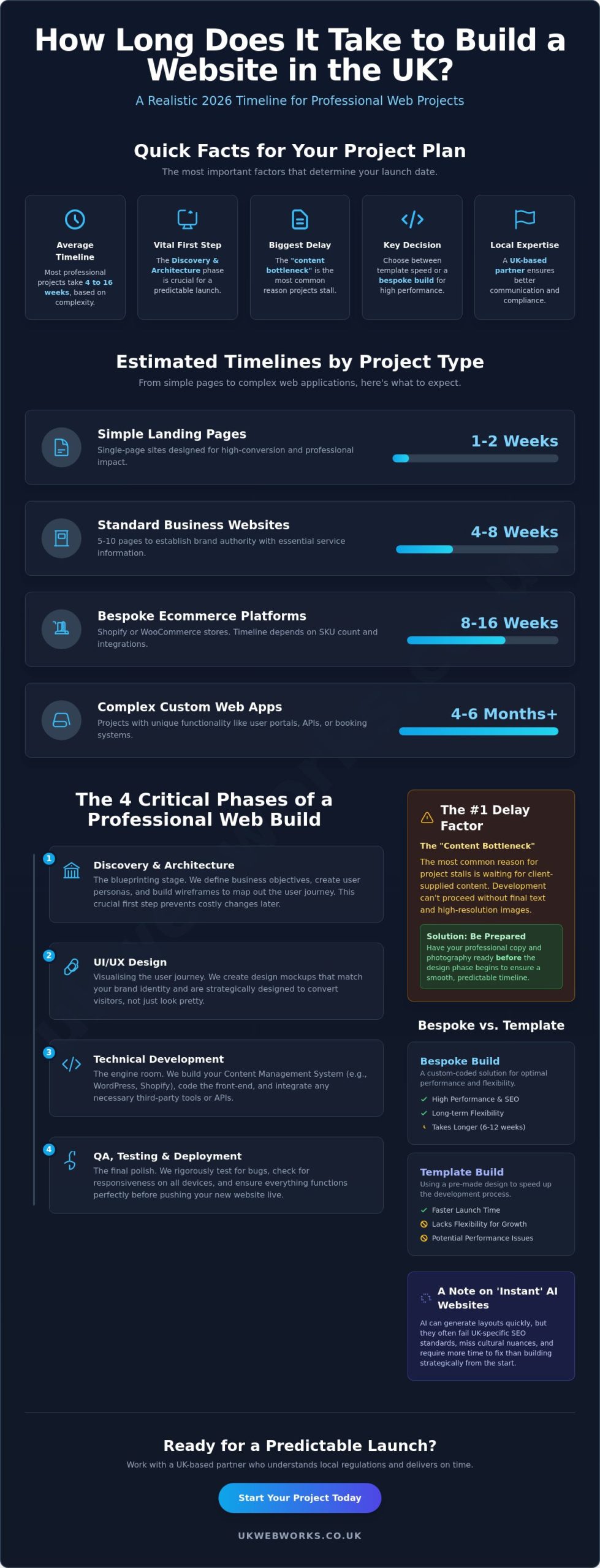
When you ask how long does it take to build a website uk, you aren’t just looking for a number on a calendar. You’re looking for a launch date you can actually trust. While DIY tools might promise a site in an afternoon, a professional build that converts visitors into customers follows a more methodical pace. In 2026, we categorise most projects into four realistic windows based on their complexity.
- Simple Landing Pages (1 to 2 weeks): These are focused, single-page sites designed for professional impact and high-conversion tracking.
- Standard Business Websites (4 to 8 weeks): Typically consisting of 5 to 10 pages, these sites establish your brand authority and include essential service pages.
- Bespoke Ecommerce Platforms (8 to 16 weeks): Whether you’re using Shopify or WooCommerce, the timeline depends heavily on your SKU count and payment integration needs.
- Complex Custom Web Applications (4 to 6 months+): These projects involve unique functionality, such as user portals, custom API integrations, or complex booking systems.
Factors That Dictate Your Launch Date
Several variables influence these windows. The most significant is the Web development process itself, which includes everything from coding the back-end to ensuring your site is responsive on every device. If you need advanced functionality like multi-currency payments or a gated client area, your timeline will naturally lean toward the longer end of these estimates. Your choice between a template-based design and a bespoke build also plays a huge role. Templates can shave weeks off a project, but they often lack the long-term flexibility a growing UK business needs. Finally, the availability of your content and branding assets is the most common reason projects stall. If we’re waiting for high-resolution images or final text, the developer can’t move forward.
Why ‘Instant’ AI Websites Often Require More Work
You’ll likely see adverts for ‘instant’ AI websites that claim to be ready in minutes. It’s true that AI can generate a basic layout quickly. However, there’s a massive difference between a page that is technically ‘live’ and a brand that is ‘business-ready.’ AI-generated content frequently fails to meet UK-specific SEO standards and often misses the cultural nuances of your local market. We find that fixing generic AI layouts and correcting ‘hallucinated’ information often takes longer than building a clean, strategic design from the start. A professional build ensures your site is a reliable tool for growth, not just a digital placeholder.
The 4 Critical Phases of a Professional UK Web Build
A successful website isn’t built in a single, frantic burst of coding. It’s a methodical process that ensures your digital presence is both functional and visually aligned with your brand goals. Each stage has its own purpose and timeline. When you’re researching how long does it take to build a website uk, it’s helpful to see the project as a structured journey rather than a black box. A professional build typically follows these four critical milestones:
- Phase 1: Discovery and Architecture (The blueprinting stage).
- Phase 2: UI/UX Design (Visualising the user journey).
- Phase 3: Technical Development (Coding and integration).
- Phase 4: QA, Testing, and Deployment (The final polish).
Phase 1 & 2: Strategy and Creative Design
The first two weeks of any project are the most important. This is when we define your business objectives and create user personas to understand exactly who your site is for. We don’t write a single line of code until we’ve wireframed the skeleton of your site. These blueprints act as a guide for the user journey and help us identify potential navigation issues early. Once the structure is agreed, we move into UI/UX design. This is where we visualise the site and review design mockups to ensure they match your brand identity. When you choose to build a website with a professional developer, this creative phase ensures the final product isn’t just pretty, but strategically designed to convert visitors. If you have specific ideas you’d like to explore, you can reach out to our Yorkshire team for an initial chat about your vision.
Phase 3 & 4: Development and Launch
After the designs are approved, we enter the technical development phase. This is the engine room of the project. We build your Content Management System (CMS), such as WordPress or a Shopify ecommerce store, tailored to your exact needs. We also integrate the third-party tools you rely on, like your CRM or email marketing platforms. This coding stage typically takes the longest, but it’s where your site truly comes to life. The final phase is dedicated to QA, testing, and deployment. We perform rigorous cross-browser testing on mobile and desktop devices to ensure everything works perfectly. In 2026, this also includes verifying that your site meets WCAG 2.2 accessibility standards. We don’t just flip a switch; we ensure the final polish is perfect before your site goes live to the public. This measured approach prevents the technical glitches that often plague rushed projects.
Bespoke vs. Template: Speed vs. Long-Term Performance
Choosing between a pre-made template and a custom build is often the biggest factor in your project timeline. When you ask how long does it take to build a website uk, you’re essentially choosing between a quick fix and a lasting asset. Templates are undeniably faster, usually taking between 2 and 4 weeks to launch. They’re a popular choice for new businesses that need a digital presence yesterday. However, this speed comes with a trade-off that many owners don’t consider until they’re several months into the project.
One of the hidden costs of template builds is “code bloat.” These themes are designed to cater to every possible industry, which means they include massive amounts of code you’ll never use. This extra weight slows down your page loading times and can negatively impact your search engine rankings. We’ve seen many businesses in Hull start with a template to save time, only to pivot to a bespoke solution 18 months later when they outgrow the rigid structure and find their site can’t handle increased traffic or new features.
When to Choose a Template Build
A template is a practical choice if you’re launching a “proof of concept” or a temporary landing page for a specific event. If your primary goal is to get online with a minimal upfront investment, a 2 to 4-week turnaround is achievable. You should be aware that customising the user experience (UX) is notoriously difficult with these systems. You’re often forced to fit your brand’s unique message into the template’s pre-defined boxes rather than building a site that serves your customers’ specific needs. It’s a short-term solution that requires more maintenance as the underlying theme becomes outdated.
The ROI of Bespoke Web Development
Bespoke web development requires a larger time commitment, typically ranging from 6 to 12 weeks. This extra time is spent crafting a site that is built specifically for your conversion goals. Every line of code is written with a purpose, which leads to significantly faster loading times and a superior foundation for any SEO agency Hull to build upon. A bespoke site is also inherently scalable. As your business expands, your website can grow with you. You can add unique features, integrate complex databases, or expand your service pages without the need for a total rebuild. This long-term performance and flexibility usually far outweigh the initial time savings of a template, providing a much higher return on your investment over time.
The #1 Delay Factor: The Content Bottleneck
You might have a clear vision for your site, but the reality of gathering every piece of text and every image can be overwhelming. This is the stage where most projects slow down. When you’re asking how long does it take to build a website uk, you’re usually thinking about the coding time. However, the clock often stops because the developer is waiting for the client to send over the final copy. We can’t finish the visual ‘look’ of a page using generic placeholder text. Real words have different lengths and weights. A design that looks great with three lines of text might break with ten.
It’s also about the quality of your assets. While stock images are a quick fix, they often feel cold and impersonal. High-resolution photography of your local team or your Yorkshire premises builds immediate rapport with your visitors. If you’re building an ecommerce store, you’ll need clear, professional shots of every SKU before the site can go live. Preparing these assets before the project kicks off is the most effective way to ensure you hit your launch date.
A Checklist for Content Readiness
To keep your project moving, we recommend having a core set of materials ready before we start. This isn’t just about filling pages; it’s about providing the information your customers actually want. Focus on these three areas first:
- Finalised Service Descriptions: Clear, jargon-free narratives about what you do and who you help.
- High-Quality Product Assets: For ecommerce projects, this includes both images and technical specifications.
- Testimonials and Case Studies: Real proof from your existing customers that validates your expertise.
How We Help Streamline the Process
We don’t just leave you to struggle with a blank page. We use dedicated content collection tools to prevent the confusion of endless email chains. This keeps everything in one place and shows you exactly what is missing. Our approach is refreshingly direct; we’ll guide you through what we need without using complex technical terms. We also ensure your content aligns perfectly with your brand identity agency strategy, so your voice is consistent across every page. If you’re worried about the writing side of things, we can provide professional copywriting to take the pressure off your team. To get a head start on your project, book a project discovery session with us today.
Choosing a UK Partner: Why Local Expertise Matters
When you choose a digital partner, geographic proximity isn’t just about a shorter commute. It’s about shared values and real-time communication. If you’ve spent weeks wondering how long does it take to build a website uk, the last thing you want is a partner who only responds while you’re asleep. Working with a local agency means your project moves during your business hours. Issues are resolved in minutes, not days, which keeps the momentum high and the timeline tight. This time-zone advantage is often the difference between launching on schedule and facing weeks of avoidable delays.
There is a level of accountability that only comes from knowing exactly who is building your digital asset. We understand the Yorkshire business landscape and the specific expectations of your local customers. Whether we meet for a discovery session in Hull, Leeds, or York, that face-to-face interaction ensures we’re on the same page from day one. You aren’t just another ticket in a global support system; you’re a partner in a collaborative process. We value hard work and long-term relationships, which is why we prioritise being accessible and direct in every conversation.
The UK Web Works Method
We’ve refined our approach to eliminate the guesswork that often haunts web projects. Our fixed-price quotes respect your budget and provide a clear roadmap for the weeks ahead. A dedicated project manager oversees the four critical phases, ensuring that design approved in week two doesn’t stall in the development phase in week six. Our focus on web design Hull is built on a foundation of craftsmanship and a promise of linguistic simplicity. We don’t hide behind complex technical terms; we explain the practical impact of every decision we make together.
Next Steps for Your Project
Booking a discovery call is the fastest way to get a specific timeline tailored to your unique business goals. When we talk, we can move past general estimates and look at the actual functionality you need. To speed up your quote, it’s helpful to bring your existing branding assets and a rough idea of your required pages to our first meeting. Starting your project now ensures your site is fully tested, compliant with 2026 accessibility standards, and live before your next peak season begins. When you’re ready to move from uncertainty to a predictable launch date, we’re here to help you get there. Every successful build starts with a single, honest conversation about what you need to achieve online.
Launch Your Professional Website with Confidence
Building a successful digital presence is about more than just hitting a deadline. It’s about creating a high-performing tool that works for your business. We’ve seen how a structured approach, from blueprinting to final testing, ensures your project stays on track. By focusing on bespoke development and preparing your content early, you avoid the common pitfalls that cause delays. When you’re planning how long does it take to build a website uk, a realistic schedule is your most valuable asset.
Since 2014, we’ve helped businesses across Hull and Yorkshire navigate the complexities of the web without the technical jargon. Our team specialises in bespoke designs that typically launch within 6 to 10 weeks, providing you with a scalable platform built for growth. We’re here to offer the direct, honest advice you need to get your project moving. You can get a realistic timeline and fixed-price quote for your project today. Let’s start building a website that truly delivers for your brand.
Frequently Asked Questions
Can you build a website in 24 hours?
No, a professional business-ready website cannot be built in 24 hours. While AI tools can generate a basic page in minutes, they lack the strategic depth, SEO foundation, and rigorous testing required for a commercial asset. A rushed launch often leads to technical errors and a poor user experience that takes longer to fix than building it correctly from the start.
Does a WordPress site take less time to build than Shopify?
Neither platform is inherently faster to build. The timeline depends on the complexity of your features rather than the choice of CMS. A basic Shopify store might be quicker to set up for simple retail, but a bespoke WordPress project allows for deeper customisation. Both require the same 4-phase process of discovery, design, development, and testing to ensure high quality.
How much of my time will the website build require?
You should budget approximately 2 to 4 hours per week for your project. This time is spent in discovery sessions, reviewing design mockups, and approving final content. Being available for feedback is essential. If you can’t commit this time, the project will naturally slow down as we wait for your input to move to the next stage of the development process.
Will my website be finished sooner if I use a template?
Yes, using a template can reduce the build time to 2-4 weeks. This is because the structural code is already written. However, you’ll be limited by the template’s layout and functionality. While it is a faster route to going live, many businesses find they eventually need a bespoke build to handle growth and improve their long-term search engine performance.
What happens if the project goes over the estimated deadline?
We use a dedicated project manager to keep every milestone on track and prevent deadline slippage. If a delay occurs, it is usually due to a content bottleneck or a shift in the project’s scope. We believe in direct communication and will notify you immediately if the timeline needs adjusting, ensuring there are no surprises when you are planning your marketing launch.
Does the location of the agency (e.g., Hull vs London) affect the timeline?
Being local to an agency in Hull or Yorkshire can actually speed up the process. Face-to-face discovery sessions often resolve complex requirements faster than a long chain of emails or video calls. While a London agency follows the same technical steps, the ease of real-time communication with a local partner helps keep the momentum high throughout the entire build.
How long does it take to migrate an existing website to a new design?
Migrating an existing site typically adds 2 to 4 weeks to the total timeline. This extra time is necessary to map out your URL structure, move customer data, and ensure your current SEO rankings aren’t damaged. It is a delicate process that requires careful planning to make sure your new site performs significantly better than the one it is replacing.
Do I need to have all my content ready before you start?
You don’t need every word finished on day one, but having a clear outline is vital. When you’re considering how long does it take to build a website uk, remember that waiting for content is the most common cause of delays. Starting with your service descriptions and high-quality images ready will significantly shorten the period between the design phase and your actual launch date.