
Waiting for your website to break before you fix it is the most expensive way to run a digital business in 2026. You likely already know that a slow or broken site turns customers away, but getting a straight answer on the actual website maintenance cost uk 2026 often feels like pulling teeth. Many agencies hide behind vague quotes or bury you in talk about PHP versions and SSL renewals. It’s frustrating to feel like you’re paying for a service without knowing what’s actually happening under the bonnet.
We believe you deserve a clear, no-nonsense breakdown of where your money goes. In this guide, we’ll strip away the technical jargon and show you exactly what professional support should look like for your specific business size. We’ll explore the practical side of staying compliant with the latest ICO tracking guidance and WCAG 2.2 accessibility standards. By the end, you’ll have a solid monthly budget figure and the confidence to know your site is a reliable asset, not a hidden liability.
Key Takeaways
- Understand the hidden financial risks of ignoring security updates and why proactive care is cheaper than emergency repairs.
- Get a clear picture of the website maintenance cost uk 2026 for different business sizes, from simple brochure sites to busy ecommerce shops.
- Compare the pros and cons of monthly retainers versus hourly support to find the most cost-effective fit for your traffic levels.
- Learn which technical tasks are non-negotiable, including hosting, SSL renewals, and CMS security patches.
- Discover how transparent, fixed-price maintenance plans can prevent “bill shock” and keep your digital presence running smoothly.
The Real Cost of Neglecting Your Website in 2026
Building a website is a major milestone for any business. However, the idea that you can “set and forget” your digital home is a myth that could cost you dearly. In the UK market, your digital presence is often the first point of contact for a potential customer. If that presence is broken, slow, or outdated, you aren’t just losing a visitor; you’re losing revenue. Treating your site as a one-off project rather than part of your fundamental business operations can lead to a nasty surprise when you eventually calculate your website maintenance cost uk 2026.
A four-hour outage might seem minor, but the ripple effects are significant. For a standard business, this isn’t just a technical glitch. It’s four hours of missed enquiries, failed transactions, and frustrated clients who will likely head straight to a competitor. Beyond the immediate loss, search engines like Google have become even more sophisticated. They actively penalise sites that show signs of neglect, such as slow loading times or security vulnerabilities. We view maintenance as a “Digital MOT.” Just as you wouldn’t drive a car for years without a service, your website needs regular checks to remain roadworthy and visible. Proactive care is always cheaper than a total emergency repair.
The Hidden Risks of Outdated Software
Cyber-security threats have evolved rapidly. By 2026, automated attacks target small business sites every single day. Waiting for a yearly update is no longer enough; you need monthly checks to keep your data safe. We often see a domino effect where one outdated plugin or theme file conflicts with a server update, causing the entire layout to break. Technical debt is the hidden cost of ignoring small website updates today that eventually forces you to pay for a full, expensive rebuild tomorrow.
Performance Decay and User Trust
Users in 2026 have zero tolerance for friction. If a page takes more than a couple of seconds to load, they’re gone. Regular maintenance ensures your site stays lean and fast, which directly supports your conversion rates and keeps your website maintenance cost uk 2026 predictable. Broken links are another silent killer. They suggest to a potential client that you don’t pay attention to detail, which can instantly damage your professional reputation. Keeping things sharp and functional is the simplest way to maintain user trust and ensure your investment continues to work for you.
Breaking Down Professional Website Maintenance Costs
Many business owners look at their annual budget and wonder why the website maintenance cost uk 2026 varies so much between providers. It’s because “maintenance” is an umbrella term that covers several distinct services. At its simplest, it includes the core essentials that keep your site live. These are items like managed web hosting, SSL certificates for data encryption, and domain name management. Without these, your site simply doesn’t exist on the web. Organizations like the Federation of Small Businesses (FSB) often highlight that digital resilience is a top priority for UK firms, and these core elements form the foundation of that resilience.
What You Are Actually Paying For
There’s a big difference between managed hosting and a full maintenance plan. Managed hosting keeps the server running, but maintenance keeps the website itself functional. This involves regular CMS updates, security patches, and database optimisations to prevent “bloat” that slows your site down over time. While many providers use automated tools, manual testing is the gold standard. Relying solely on automated updates in 2026 is a recipe for disaster, as plugin conflicts can often break a site’s layout or checkout process without triggering a technical alert. Professional support ensures a human eye checks that your buttons still work and your forms still send after every update.
Performance monitoring is another vital component. This includes uptime tracking and speed optimisations to ensure you meet modern user expectations. We also factor in content and design support for those small tweaks and bug fixes that inevitably pop up as your business evolves. If you’re looking for a reliable partner to handle these technical hurdles, our Website Maintenance Plans are designed to keep your site sharp without the stress.
Security and Peace of Mind
Security is the most critical part of any package. In 2026, daily backups are the absolute minimum standard. If something goes wrong, you need to be able to roll back to a version from 24 hours ago, not last month. Professional plans also include proactive malware scanning and firewall management. If a breach does occur, the cost of professional cleanup services can be astronomical if you aren’t already covered by a plan. Ultimately, the most valuable part of any package is the allocated support hours. Knowing you have a dedicated expert to call when a link breaks or a page looks wrong provides a level of peace of mind that a budget, automated service simply can’t match. It transforms your website maintenance cost uk 2026 from an annoying expense into a proactive insurance policy for your brand.
Maintenance Models: Monthly Retainers vs. Pay-As-You-Go
Choosing the right support model is just as important as the technical work itself. Determining your website maintenance cost uk 2026 depends heavily on whether you prefer a fixed monthly fee or a reactive hourly rate. While pay-as-you-go might seem flexible for very low-traffic sites, most UK agencies are moving away from ad-hoc repairs in 2026. This shift is happening because reactive fixes are often more expensive and difficult to schedule during an emergency. A monthly retainer, by contrast, offers predictable costs and ensures your site is a priority rather than a ticket at the back of a queue.
The True Cost of DIY
Many business owners start by trying to handle everything themselves to save money. However, the data suggests this is often a false economy. Managing a professional site properly involves roughly 8 to 12 hours of work per month. If you value your time at a conservative £30 per hour, you’re looking at an opportunity cost of £240 to £360 every month. That’s time you aren’t spending on sales, strategy, or client service. There is also the “I broke it” tax to consider. When a DIY update goes wrong and takes the site down, fixing the mistake usually costs significantly more than the price of a proactive professional plan.
Retainer Benefits for Small Businesses
A monthly retainer acts as a digital insurance policy for your brand. It gives you peace of mind that someone is already watching your site’s performance and security. When an issue arises, priority support ensures you’re back online quickly. This model also makes financial sense for long-term planning. The UK Government Guidance on Website Costs notes that ongoing maintenance and updates are typically treated as revenue expenditure, making them easier to manage in your annual accounts.
By investing in professional website maintenance packages, you gain a partner who understands your site’s unique history. They don’t have to learn your setup from scratch every time you need a change. This deep knowledge of your digital assets leads to faster resolutions and a more stable website. Ultimately, a retainer allows you to treat your website maintenance cost uk 2026 as a steady, manageable operational expense rather than an unpredictable financial burden.
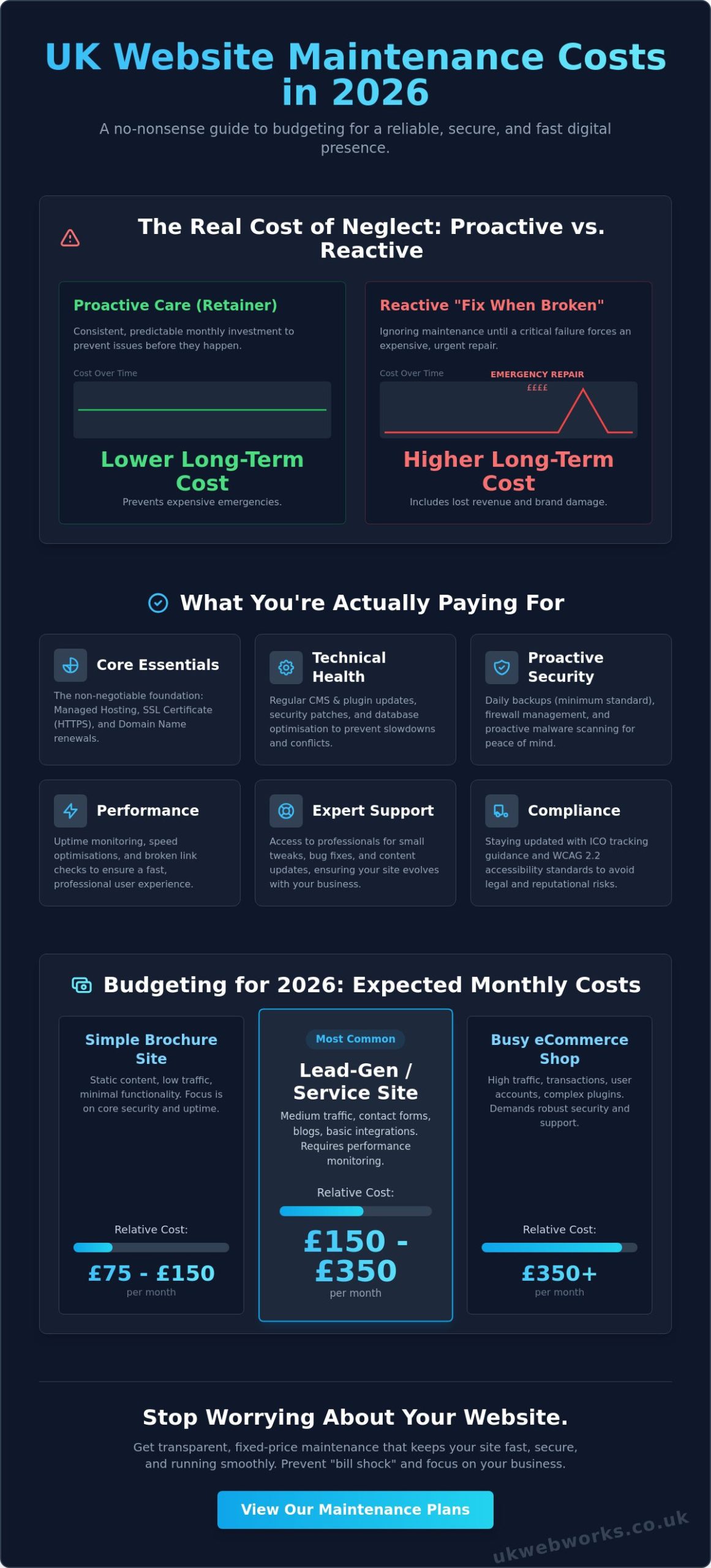
Budgeting for 2026: What Different UK Businesses Should Expect
Budgeting for your online presence shouldn’t feel like guesswork. While every site is unique, the website maintenance cost uk 2026 generally falls into specific tiers based on your business size and technical needs. By identifying which category you fit into, you can allocate funds effectively without overpaying for unnecessary extras or under-investing in critical security. The key is to match your maintenance level with the value your website brings to your daily operations.
Small Business Budgeting (The “Essential” Tier)
For a standard WordPress or simple CMS brochure site, you’re looking at a range that keeps the lights on and the doors locked. Current market data indicates that fully managed plans for small businesses typically sit between £29 and £100 per month. At a bare minimum, this should cover security patches, monthly plugin updates, and reliable off-site backups. We often see business owners tempted by “cheap” hosting that costs less than a coffee, but this is a false economy. Budget hosting usually lacks the resources to handle modern security threats, which leads to much higher maintenance bills when things inevitably break.
Ecommerce and High-Functionality Sites
When your website is your primary salesperson, the stakes are much higher. Maintaining Shopify or WooCommerce stores requires a more hands-on approach to protect your revenue. For growing shops, costs usually range from £150 to £600 per month. This isn’t just for updates; it’s for transaction security, database health, and ensuring your checkout remains frictionless. The ROI of uptime for an online shop is measured by the total revenue preserved during peak traffic periods minus the cost of the proactive monitoring that prevented a crash. If you’re ready for a transparent approach to your digital budget, you can explore our professional maintenance options to see exactly what’s included.
Bespoke or enterprise solutions sit at the top of the scale, often starting from £600 per month and reaching well into the thousands for high-traffic clusters. These sites usually involve complex APIs, high-resolution video streaming, or custom-built functionality that requires dedicated developer hours. Factors like integrating third-party software or managing large-scale data clusters will naturally push your website maintenance cost uk 2026 higher. By understanding these tiers, you can make an informed decision that protects your brand and supports your growth without any hidden surprises or technical “bill shock.”
Why Transparent Maintenance Plans Save You Money Long-Term
Transparency shouldn’t be a luxury in the digital world. We’ve seen too many UK business owners get stung by “black hole” pricing, where a simple update turns into a massive, unpredicted invoice. By choosing a fixed-price model, you can lock in your website maintenance cost uk 2026 and remove the anxiety of bill shock. This approach allows you to plan your cash flow with confidence, knowing that your security, hosting, and technical support are all covered by a single, honest figure. It turns your website from a source of stress into a predictable operational expense.
Reporting is the cornerstone of this transparency. You deserve to see exactly what tasks have been performed each month, from security scans to database optimisations. It isn’t enough for an agency to say “everything is fine.” You should see the evidence in black and white. Moving from a cycle of stressful emergency fixes to a structured professional plan is the smartest way to protect your bottom line. It ensures your site remains a high-performing asset rather than a liability waiting to break at the worst possible moment.
Looking for Integrity in a Web Partner
Before you sign any contract, ask the tough questions. Does the agency perform manual checks after updates? Will you receive a monthly report? Do they understand the regional market? We prioritise clear communication because we know that technical complexity is often used to hide a lack of value. Working with a team that offers a full suite of services, from WordPress CMS Development to SEO, means your maintenance plan is handled by experts who see the bigger picture. We don’t just fix bugs; we ensure your site continues to support your wider business goals.
Ready to Protect Your Digital Investment?
Maintenance isn’t a cost to be minimised, but an investment to be managed. A healthy, fast, and secure site is a prerequisite for effective marketing and customer trust. If you aren’t sure where you stand, start by auditing your current website health. Check your page load speeds and look at the date of your last security patch. If the results are concerning, it’s time to transition to a more reliable support model. You can get a straightforward, jargon-free maintenance quote from UK Web Works today to see how we can help you manage your website maintenance cost uk 2026 with total clarity.
Take Control of Your Website’s Future
Your website is a vital part of your business operations. We’ve explored how a proactive “Digital MOT” prevents expensive outages and keeps you on the right side of UK compliance. Moving from reactive, ad-hoc repairs to a managed plan is the most effective way to stabilise your budget and protect your professional reputation. It’s about turning a potential technical headache into a predictable, high-performing asset that works for you around the clock.
Getting a clear answer on your website maintenance cost uk 2026 shouldn’t be a struggle. Since 2014, we’ve provided grounded, no-nonsense advice to help businesses across the UK grow with confidence. As a full-service digital agency, we offer the UK-wide support you need to keep your site secure and fast without the technical jargon. We’re ready to act as your dedicated technical partner, ensuring your digital investment is always protected.
Get a Jargon-Free Website Maintenance Quote
You’ve worked hard to build your presence online. Now, let’s make sure it stays strong and reliable for the years to come.
Frequently Asked Questions
Is website maintenance really necessary for a new site in 2026?
Yes, maintenance is essential from the day your site goes live. Automated security threats target websites of all ages, and software developers release patches for vulnerabilities constantly. Even a brand-new site relies on third-party plugins or themes that require regular updates to stay secure and compatible with modern web browsers. Think of it as a proactive insurance policy that protects your initial investment.
How much does the average website maintenance cost per month in the UK?
The website maintenance cost uk 2026 depends on the level of manual care your site requires. Budget automated services often range from £20 to £40, while a fully managed plan from a specialist agency typically sits between £80 and £200. For complex ecommerce stores or high-traffic enterprise sites, you should expect to budget significantly more to cover the increased technical demands.
Can I do my own WordPress maintenance to save money?
You can manage your own updates, but it often leads to a high opportunity cost. You’ll need to handle backups, security scanning, and manual testing yourself, which takes time away from running your business. If an update causes a conflict and breaks your site, the cost of an emergency professional repair is usually much higher than the price of a steady, proactive maintenance plan.
What happens if I stop paying for website maintenance?
Your website will gradually become a security risk and its performance will likely drop. Without regular patches, your site is more vulnerable to malware and hacking attempts. Over time, the software will become outdated, leading to broken features, slow loading speeds, and a poor user experience. This neglect can eventually damage your search engine rankings and your brand’s professional reputation.
Does website maintenance include SEO updates?
Technical maintenance and SEO are usually separate services. Maintenance focuses on the “health” of the site, such as security, speed, and uptime. However, a solid maintenance plan provides the foundation for successful SEO. By keeping your site fast and free of technical errors, you’re satisfying key search engine ranking factors, though you’ll still need specific SEO strategies to grow your visibility.
How do I know if my current agency is actually doing the maintenance I pay for?
A trustworthy partner will always provide a monthly report. This document should list the specific updates performed, the results of security scans, and your site’s uptime percentage. If your agency is vague about their activities or fails to provide regular evidence of their work, it’s difficult to justify your website maintenance cost uk 2026. Transparency is the only way to ensure you’re getting true value.
Are hosting and maintenance the same thing?
No, they are two different services. Hosting is the space you rent on a server to store your website’s files so they can be accessed online. Maintenance is the active service of keeping those files updated, secure, and functional. While some providers offer both in a single package, you shouldn’t assume that paying for hosting automatically includes technical support or security updates.
Do I need a maintenance plan for a Shopify or Wix site?
Yes, though the requirements are different from a platform like WordPress. While these providers handle core server security, you still need to manage your own app updates, content changes, and accessibility audits. For ecommerce sites, regular monitoring of the checkout process and database health is vital to ensure you don’t lose sales due to a technical glitch or a slow-loading page.