
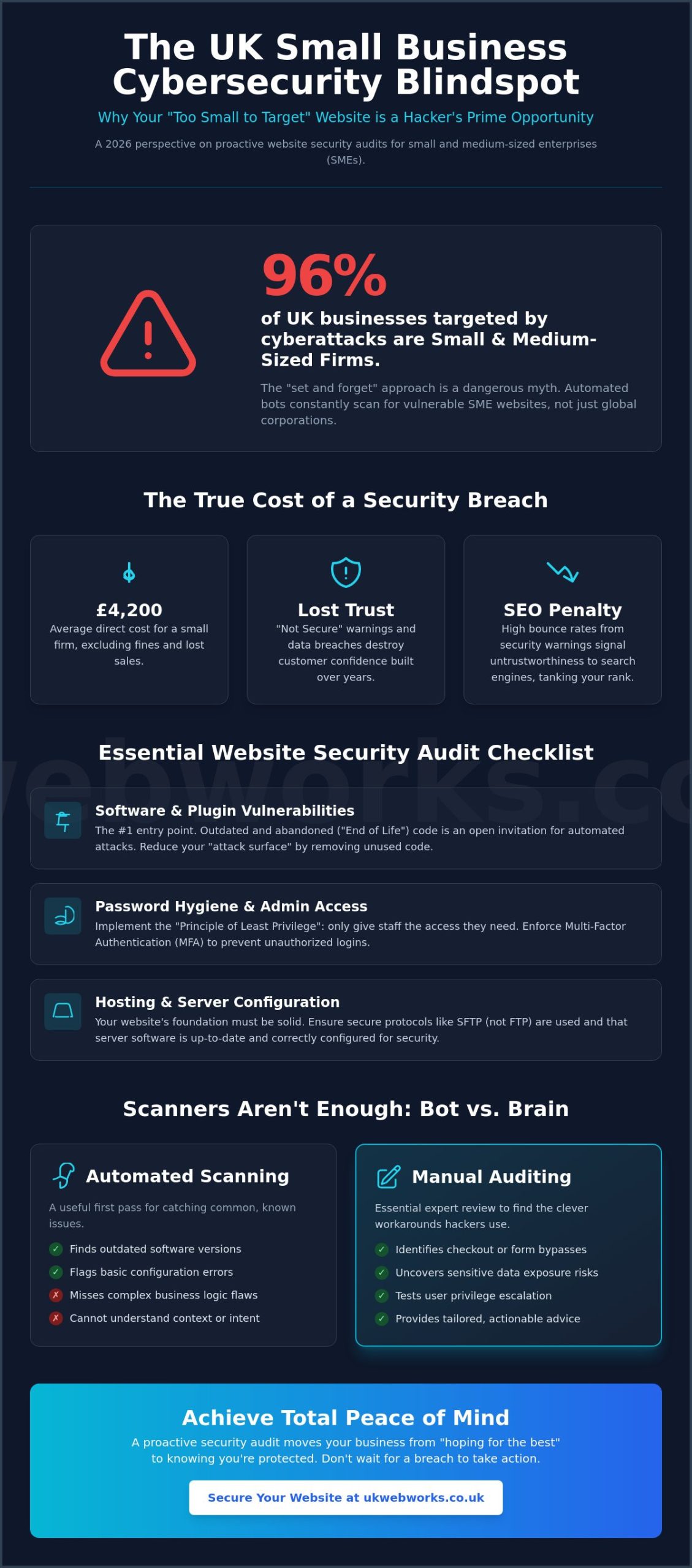
Did you know that 96% of all UK businesses targeted by cyberattacks are small and medium-sized firms? It’s a common mistake to think that hackers only care about global corporations, but the reality is that smaller sites often have the most vulnerable entry points. If you’ve been delaying a website security audit uk because you feel your business is “too small” to be a target, these figures from the latest 2026 reports suggest it’s time to think again.
We know how exhausting it is to hear technical jargon from hosting companies or feel the weight of potential GDPR fines. You want your site to be safe and your customer data to be protected, but you don’t want to get lost in complex code. This guide is built for you. We promise a straightforward, jargon-free look at how to identify risks and secure your business against modern threats without the headache.
We’ll start by looking at the impact of the new Cyber Security and Resilience Bill, then move through a practical checklist covering everything from common vulnerabilities to the latest security standards. It’s about giving you the confidence to manage your online presence safely, professionally, and with total integrity.
Key Takeaways
- Learn why “set and forget” is a dangerous myth. We’ll show you how a proactive health check protects your digital storefront from modern threats.
- Discover the 7 essential areas to review during a website security audit uk, including how to identify outdated software and manage user access safely.
- Scanners aren’t enough. Understand why manual reviews are necessary to catch the complex logic flaws that automated bots often miss.
- Get clear on your 2026 legal obligations under UK GDPR. Staying on the right side of the Information Commissioner’s Office doesn’t have to be complicated.
- Achieve total peace of mind with a straightforward security review. Our approach avoids hidden technical traps and confusing jargon.
What is a Website Security Audit and Why Does Your UK Business Need One?
Imagine your website is a physical shop on a busy high street in Leeds or York. You wouldn’t leave the front door unlocked overnight or ignore a broken window. A Information security audit acts as a professional health check for that digital storefront. It’s a deep dive into your site’s foundations to find the cracks before a criminal does. For many owners, a website security audit uk is the difference between a thriving online presence and a sudden, expensive disaster.
In 2026, the “set and forget” approach to web management is a dangerous myth. The digital landscape moves too fast for that. New vulnerabilities are discovered daily, and hackers don’t just target global corporations. They use automated bots to scan thousands of sites at once, looking for any small opening. If your site hasn’t been reviewed recently, you’re essentially leaving the keys in the lock. Automated server scans are useful for catching obvious errors, but they lack the intuition of a human expert. A full manual audit looks for logic flaws that a bot might miss, such as how a user could bypass a checkout or access sensitive data through a clever workaround.
The Real Cost of a Security Breach for SMEs
When a breach happens, the technical fix is often the cheapest part of the process. The real damage is to your reputation. If a customer in Hull or York sees a “Not Secure” warning in their browser, they’ll leave your site immediately. This spike in bounce rate tells search engines your site isn’t trustworthy, which can tank your SEO rankings. According to the 2026 Cyber Security Breaches Survey from GOV.UK, 43% of UK businesses faced a breach in the last year. For a small firm, the average direct cost sits around £4,200. That doesn’t even account for the lost sales or the years spent building local trust.
Active vs. Passive Security
Many business owners assume their hosting company handles everything. While a basic firewall is a good start, it’s only a passive first line of defence. It’s like having a sturdy fence but leaving the windows open. Active security focuses on the application level, where your WordPress or Shopify setup lives. You need to look at how your specific plugins, themes, and user permissions interact. A security audit is a proactive review of code, access, and infrastructure. It moves you from “hoping for the best” to knowing you’re protected.
The 2026 Website Security Audit Checklist: 7 Essential Areas to Review
A website security audit uk doesn’t have to be a confusing list of technical chores. Think of it as a structured walkthrough of your digital property to ensure every lock is functional and every window is shut. By following a clear checklist, you can move from feeling overwhelmed to feeling in control of your business’s safety. We’ve identified seven core areas that every small business should review to stay ahead of modern threats.
Software and Plugin Vulnerabilities
Outdated WordPress plugins remain the primary entry point for hackers in the UK. When a developer stops updating a plugin, it reaches its “End of Life” (EOL). These abandoned tools no longer receive security patches, making them an open invitation for automated bots. During your audit, you should identify any software that hasn’t seen an update in the last six months. If a plugin is no longer supported, it’s time to find a modern alternative. Reducing your “attack surface” is also vital; if you have unused themes or old scripts sitting on your server, delete them. Every piece of code you keep but don’t use is a potential vulnerability.
Password Hygiene and Administrative Access
We often see businesses where every staff member has full “Admin” access to the website. This ignores the “Principle of Least Privilege,” which simply means giving people the minimum level of access they need to do their jobs. If someone only needs to write blog posts, they shouldn’t have the power to delete the entire database. Every user account is a potential door for an intruder. Moving beyond simple passwords to Multi-Factor Authentication (MFA) is now a standard requirement in 2026. It adds a vital second layer of verification that stops most automated login attempts in their tracks.
Hosting and Server Configuration
Your hosting environment is the ground your website stands on. You should check if you’re using secure FTP (SFTP) rather than the older, unencrypted FTP, which sends your login details in plain text. Your server’s PHP version is another critical factor; running an unsupported version can leave your site exposed to well-known exploits. It’s essential that your website maintenance packages include consistent server-level monitoring to catch these issues early. If you’re unsure about your current hosting setup, we’re always happy to chat through your options and help you find a more secure path forward.
Encryption, Databases, and Backups
Finally, look at the data itself. Ensure your SSL/TLS certificate is not just present, but correctly configured to use modern encryption standards. Your database should be checked for hidden vulnerabilities, such as default table prefixes that make it easier for hackers to guess your structure. Most importantly, verify your backup integrity. A backup is only a safety net if it actually works. Regularly test your recovery process to ensure that if the worst happens, you can be back online in minutes, not days. This proactive approach turns security from a worry into a managed part of your daily operations.
Vulnerability Scanning vs. Manual Audits: Choosing the Right Approach
Choosing between an automated scan and a manual review often comes down to your budget and the level of risk you’re willing to carry. While both play a role in a comprehensive website security audit uk, they serve very different purposes. You can’t rely on one to do the job of the other. It’s about finding a balance that keeps your business safe without overcomplicating your daily operations. We see many owners get a false sense of security from automated tools, only to find that the “human element” was where their real risk lived.
When to Use Automated Tools
Automated tools are best for daily or weekly “sanity checks” of known vulnerabilities. Services like the NCSC Check are fantastic for Yorkshire startups to get started because they’re often low-cost or free. These tools scan your site for common “signatures” of malware or outdated server headers. They’re efficient at catching the obvious stuff. However, a “green light” from a scanner doesn’t mean you’re 100% safe. Scanners are literal; they don’t understand context. They won’t notice if a legitimate-looking form is actually leaking customer data to an unauthorised third party because the code itself isn’t “malicious” in a traditional sense.
The Benefits of a Professional Manual Audit
A professional manual audit is where a human expert probes your site for complex logic flaws. These are vulnerabilities that bots miss because they require an understanding of how your business actually functions. For example, a manual audit might reveal that a user could manipulate a shopping cart to change a price or access another customer’s private account details. This level of scrutiny provides a prioritised “Action Plan” rather than just a long, confusing list of errors. You get a clear roadmap of what to fix first based on actual business risk.
Working with a professional also ensures your security measures align with your broader growth plans. A stable, secure site is a cornerstone of any SEO agency Hull strategy. Search engines reward sites that are reliable and safe for users. If your site is frequently offline due to security patches or bot attacks, your rankings will suffer. By securing the code, you’re also securing your visibility in Google.
Setting a Schedule for 2026
In 2026, we recommend a “hybrid” approach to keep your site resilient. Use automated tools for weekly monitoring to catch new, common threats as they emerge. Then, schedule a full manual website security audit uk at least once a year, or whenever you make significant changes to your site’s functionality. If you’ve just added a new payment gateway, a booking system, or a customer portal, that’s the time to call in the experts. This methodical pace ensures you stay protected without being rattled by every new headline in the tech world. It’s about building a case for trust through consistent clarity and care.
Beyond the Code: Compliance, GDPR, and the ICO
Security is often discussed as a technical problem, but in 2026, it’s equally a legal and reputational one. A website security audit uk isn’t just about stopping hackers; it’s about ensuring your business remains on the right side of the law. If you collect customer names, emails, or payment details, you have a legal duty to protect that information. Neglecting this side of your digital presence can lead to more than just a broken site. It can result in significant financial penalties and a total loss of consumer confidence.
Compliance often feels like a box-ticking exercise, but it’s actually about transparency and integrity. You might need to conduct a Data Privacy Impact Assessment (DPIA) if you’re introducing new technologies that handle sensitive data. Beyond that, technical elements like security headers and proper cookie management are your first line of defence against regulatory scrutiny. These aren’t just “nice to have” features. They are essential tools that demonstrate to the Information Commissioner’s Office (ICO) that you take your responsibilities seriously.
UK GDPR and Your Data Responsibilities
Protecting customer data is now a core requirement of your brand identity. Under the current 2026 regulations, the ICO has the power to issue fines of up to £17.5 million or 4% of your total annual turnover for serious breaches. It’s vital to know what constitutes a reportable breach, such as the unauthorised access of personal data that could result in a risk to individuals. If a breach occurs, you are legally required to report the incident to the ICO within a 72-hour window of becoming aware of it. Being prepared with a clear incident response plan is the best way to manage these high-pressure situations calmly.
Maintaining this standard of data security is crucial for all online platforms, particularly those serving sensitive communities like Mother SEN, which offers a dedicated and secure support hub for parents of children with special educational needs and disabilities.
Security as a Competitive Advantage
While the law provides the “stick,” there is also a significant “carrot” for businesses that prioritise safety. Trust is the primary currency of the digital economy. When you display clear trust signals and security badges, you aren’t just showing off code; you’re improving your conversion rates. Customers feel safer buying from a site that looks and acts securely. This commitment to safety directly supports your brand identity agency goals by positioning you as a reliable, professional partner.
This is especially true for B2B companies in Leeds, Hull, and York. Larger organisations and potential partners will frequently ask for your security credentials before they agree to work with you. They need to know that their data won’t be compromised through your systems. By completing a thorough website security audit uk, you gain a tangible asset you can use in pitches and contract negotiations. It proves you value hard work and long-term relationships over quick, unsecure wins. If you’re worried about your current compliance level, we can help you review your site’s security and identify any areas that need immediate attention.
How UK Web Works Secures Your Digital Presence
We understand that securing your business online can feel like a mountain to climb. Our goal is to make it a manageable walk. We provide local support for businesses in Hull, York, Grimsby, and right across Yorkshire. You don’t need a degree in computer science to understand our findings. We focus on linguistic simplicity, ensuring you know exactly where you stand without the technical traps that often come with high-priced competitors. Our team acts as an ally to your business, providing the practical, hands-on work ethic you expect from a local partner.
Our approach to a website security audit uk is built on integrity and transparency. We offer fixed-price security reviews, which means there are no hidden costs or surprise fees once the work begins. You get a direct conversation with a professional consultant who values hard work and long-term relationships. We don’t hide behind code or use industry terms to confuse you. Instead, we explain the practical impact of every vulnerability we find and how it affects your bottom line. Beyond the initial audit, our Website Maintenance Plans include proactive security monitoring. This steady rhythm of care ensures your site’s health is checked every day, not just once a year.
Bespoke Security Solutions for Yorkshire Businesses
We don’t believe in one-size-fits-all security because every business has different risks. A local shop in Grimsby has different needs than a large e-commerce firm in Leeds. We integrate security into our web design Hull process from day one. This craftsmanship-focused approach ensures your site is built on a solid foundation rather than having security “bolted on” later. You’ll have direct access to local experts who speak your language and understand the regional market. We aren’t a distant corporate entity; we’re a dedicated team invested in your success.
Getting Started with Your Security Audit
Booking your website security audit uk with us is a simple, three-step process. First, we have a brief chat to understand your site’s history and your specific concerns. Second, we perform a deep-dive manual audit alongside thorough automated scans. Third, we deliver a clear, honest report with actionable fixes. You won’t just get a list of errors; you’ll get a prioritised plan to secure your business and protect your customers. We move methodically from identifying your needs to explaining exactly how we’ll fix them. Contact us today for a straightforward chat about your website security.
Taking the Next Step Towards a More Secure Website
Protecting your digital presence is about more than just software updates; it’s about safeguarding the trust you’ve built with your customers. We’ve explored how a comprehensive website security audit uk identifies the cracks that automated tools miss, from logic flaws to compliance gaps. By staying proactive with your 2026 checklist, you ensure your business remains resilient against evolving threats while meeting your legal obligations under UK GDPR.
You don’t have to tackle these technical challenges alone. Since 2014, we’ve helped businesses across Hull, York, and Leeds protect their online investments with a straightforward, no-nonsense approach. We believe in total transparency, which is why we offer fixed-price project development fees with no hidden surprises. Our local experts are here to act as your allies, providing the clarity you need to grow your presence safely.
Book your jargon-free Website Security Audit with UK Web Works and gain total peace of mind for your digital storefront. Your website is one of your most valuable assets. Let’s make sure it’s as secure as it is successful.
Frequently Asked Questions
How much does a website security audit cost in the UK?
Typical market rates for a website security audit uk vary based on the depth of the review. Basic automated scans across the industry often range from £500 to £1,500, while a comprehensive manual review for a small business usually costs between £2,500 and £6,000. These figures reflect the standard UK market rates for 2026. We always recommend choosing a fixed-price quote to ensure you don’t face unexpected technical fees later.
How long does a professional website security audit take to complete?
A thorough audit usually takes between three and seven working days to finish. This timeline allows for deep-dive technical scans followed by a manual review of your code and user permissions. If your site is particularly large or complex, such as a major e-commerce store with many third-party integrations, the process might extend slightly to ensure every corner of your digital storefront is checked.
Will a security audit slow down my website performance?
No, a professional audit is designed to have a minimal impact on your live site. Most testing is performed during low-traffic periods or on a duplicate “staging” version of your website to avoid any disruption for your customers. Fixing the vulnerabilities found during an audit often results in a faster site because we identify and remove bloated code, outdated scripts, or hidden malware that might be draining your server resources.
Do I need a security audit if I have a Shopify or Wix site?
Yes, because while these platforms manage the core server infrastructure, you remain responsible for your specific configuration. You need to audit your third-party apps, staff access levels, and how you handle customer data. A breach often happens through a poorly configured app or a weak administrative password rather than a flaw in the platform itself. An audit ensures your specific setup is as secure as the platform hosting it.
What is the difference between a security audit and a penetration test?
A security audit is a broad health check that reviews your entire setup against a specific checklist, while a penetration test is a simulated attack. Think of an audit as checking that all the locks and windows are secure and meet current standards. A penetration test is like hiring a professional to see if they can actually break in. Both are valuable, but most small businesses start with a comprehensive audit.
How often should a small business in the UK perform a security audit?
We recommend a full website security audit uk at least once a year. You should also consider a review whenever you make major changes, such as installing a new payment gateway or a customer booking system. With the 2026 Cyber Security and Resilience Bill now in effect, regular checks help you stay compliant with evolving UK regulations and protect your business from the latest automated threats.
Can a security audit help improve my Google rankings?
What happens if the audit finds a major vulnerability on my site?
If a critical issue is discovered, we provide a prioritised action plan to fix it immediately. We don’t just leave you with a list of problems; we explain the practical risk and the steps needed to secure the site. Our goal is to resolve vulnerabilities before they can be exploited by hackers, keeping your business running smoothly and ensuring your local reputation remains intact.